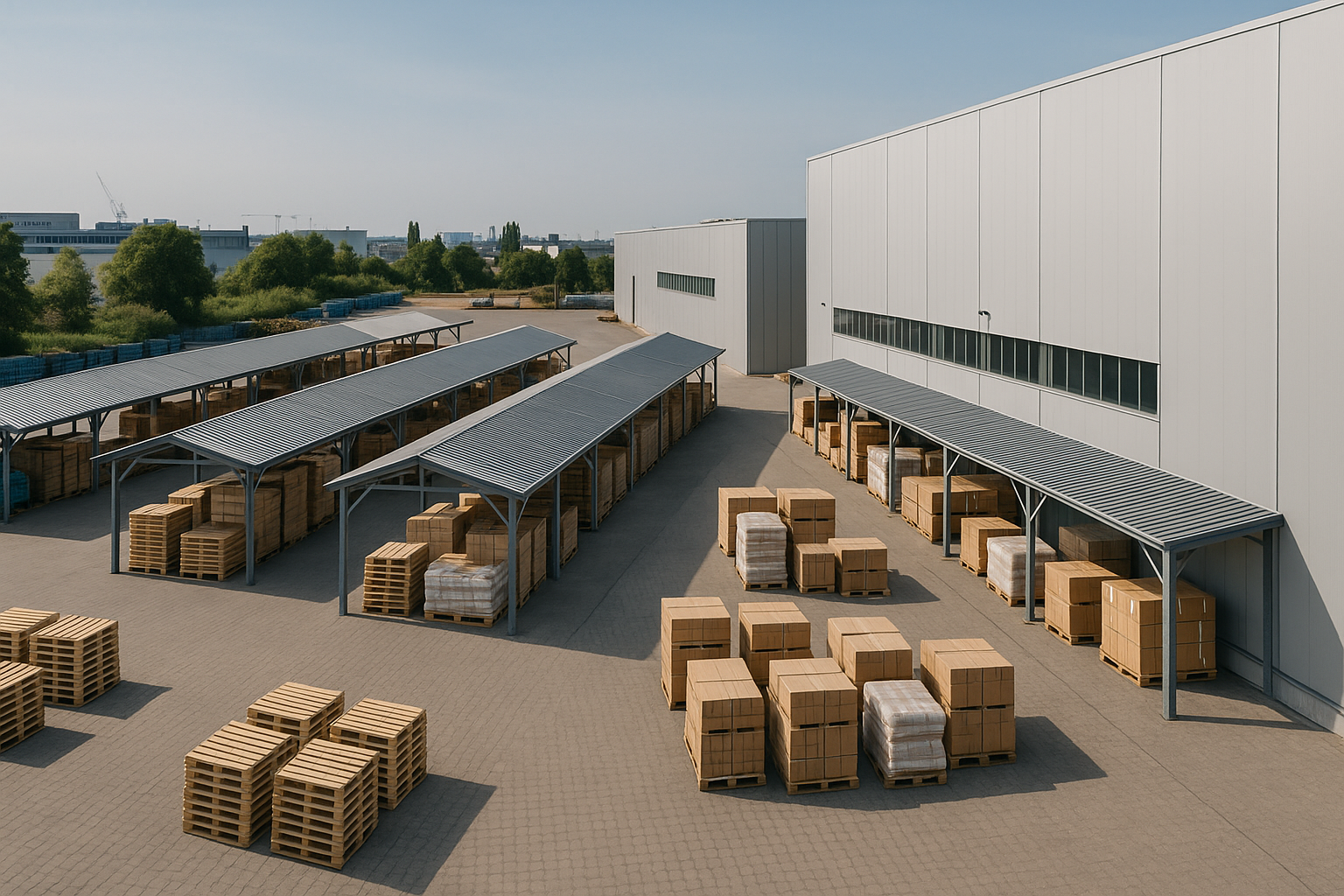
In the fast-paced world of business-to-business (B2B) e-commerce, efficient storage solutions are essential for managing inventory, reducing costs, and ensuring timely fulfillment. Outdoor storage solutions, particularly in Germany, offer a practical alternative for businesses dealing with consumable goods that don’t require climate-controlled environments. These solutions involve utilizing open-air spaces for storing packaged consumables, such as non-perishable items like office supplies, cleaning products, packaged foods, or industrial materials that are weather-resistant when properly protected. Unlike traditional indoor warehousing, outdoor storage leverages vast open yards and secure lots to handle overflow inventory, seasonal stock, and bulk consumables, making it ideal for e-commerce operations where speed and scalability are key.
Germany’s position as a leading e-commerce hub in Europe heightens the appeal of these solutions. With a robust infrastructure supporting online trade, including extensive highways and distribution networks, businesses can optimize their supply chains for B2B transactions involving consumables. As of 2025, the B2B e-commerce market in Germany is booming, with sales projected to continue growing due to digital adoption and the need for flexible storage amid fluctuating demand. This article explores the role of outdoor storage in supporting e-commerce and B2B consumables, covering market trends, types, benefits, challenges, and future developments to guide stakeholders in enhancing their operations.
The Evolution and Market Overview of Outdoor Storage in Germany
Outdoor storage has evolved from basic open lots to a strategic asset in B2B logistics, especially for e-commerce handling consumables. Historically used for bulk materials, it now supports the digital economy by providing cost-effective space for inventory that can withstand outdoor conditions with minimal protection. In Germany, this sector is gaining momentum as e-commerce expands, with B2B online sales reaching trillions of euros annually, driven by automated processes and digital platforms. The rise of mobile commerce and marketplaces has increased the need for scalable storage, where outdoor options help manage consumable goods like packaged hygiene products or office essentials without the high costs of enclosed facilities.
The market for industrial outdoor storage (IOS) in Germany is projected to grow significantly, with global IOS values expected to reach over $22 billion by 2032, reflecting a compound annual growth rate of around 7%. This growth is fueled by e-commerce demands for consumables, where businesses seek alternatives to overcrowded urban warehouses. Germany’s e-commerce landscape, with high internet penetration and a preference for online B2B procurement, positions outdoor storage as a key enabler for sectors like retail wholesaling and supply chain distribution. Factors such as sustainability goals and the push for efficient fulfillment further drive adoption, allowing companies to store consumables closer to distribution points for faster delivery.
Types of Outdoor Storage Solutions Available in Germany
Outdoor storage solutions in Germany vary to suit B2B e-commerce needs, focusing on consumables that are packaged for protection against the elements.
- Open-Air Yards for Bulk Consumables: These fenced areas are ideal for storing palletized consumables like non-perishable packaged goods. They offer flexibility for e-commerce businesses managing high-volume inventory, with easy access for loading and unloading.
- Weather-Resistant Outdoor Shelving Systems: Designed for consumables requiring some shelter, these include covered racks or tarpaulin-protected zones. Suitable for B2B e-commerce dealing in items like cleaning supplies or office consumables, they balance cost and protection.
- Modular Outdoor Units for E-Commerce Overflow: Portable, secure modules allow for temporary storage of seasonal consumables, such as holiday-themed packaged products. This type supports agile B2B operations where inventory fluctuates with market demand.
- Integrated Outdoor Lots with Fulfillment Hubs: These combine open storage with nearby logistics for quick picking and packing of consumables. In Germany’s e-commerce ecosystem, they facilitate omnichannel fulfillment for B2B clients.
- Secure Fenced Enclosures for Packaged Goods: Emphasizing security, these are used for consumables in weatherproof packaging, ensuring protection while minimizing overhead for B2B wholesalers.
Benefits and Advantages for B2B E-Commerce Operations
Outdoor storage offers substantial advantages for B2B e-commerce focused on consumables, enhancing efficiency and profitability.
- Cost Savings: By avoiding the expenses of indoor facilities, businesses can reduce storage costs by up to 50%, freeing capital for marketing or expansion in competitive e-commerce markets.
- Scalability for Fluctuating Demand: E-commerce consumables often see seasonal spikes; outdoor solutions allow easy expansion, accommodating extra stock without long-term commitments.
- Improved Inventory Management: With real-time tracking in open spaces, B2B firms can maintain accurate stock levels for consumables, reducing overstocking and stockouts.
- Sustainability Alignment: Germany’s emphasis on green practices favors outdoor storage, which has a lower environmental footprint than building-intensive warehousing, appealing to eco-conscious B2B buyers.
- Faster Fulfillment: Proximity to transport networks speeds up order processing for consumables, meeting the high expectations of German e-commerce customers for quick delivery.
Challenges and Regulatory Considerations
While beneficial, outdoor storage for consumables presents challenges. Weather exposure necessitates protective packaging, and security must be robust to prevent theft. In Germany, regulations like environmental protection laws require proper management to avoid contamination risks. Zoning laws may restrict urban placements, pushing facilities to outskirts, potentially increasing transport times for e-commerce fulfillment.
B2B businesses must also address inventory visibility issues in open spaces, using technology to mitigate errors. Rising energy costs and labor shortages can complicate operations, though digital tools help streamline processes.
Case Studies: Real-World Applications in Germany
Imagine a B2B e-commerce wholesaler of office consumables using outdoor yards to store bulk paper products and inks during peak seasons. This setup reduces costs and enables same-day fulfillment, boosting customer satisfaction. Another scenario involves a distributor of packaged cleaning supplies leveraging modular outdoor units for overflow, allowing quick scaling during demand surges without fixed leases.
In the consumables sector, a B2B platform for non-perishable foods uses secure enclosures to manage inventory efficiently, integrating with online marketplaces for seamless order handling. These examples illustrate how outdoor storage supports agile e-commerce operations in Germany.
Future Trends and Innovations
By 2030, AI and IoT will transform outdoor storage, with sensors monitoring consumable conditions in real-time for better B2B decision-making. The integration of sustainable practices, like solar-powered security, will align with Germany’s green initiatives. E-commerce growth will drive hybrid models combining outdoor storage with automated fulfillment, enhancing efficiency for consumables.
Advancements in packaging will make more consumables suitable for outdoor storage, expanding options for B2B players. As mobile commerce rises, outdoor solutions will support faster, localized distribution.
Conclusion: Leveraging Outdoor Storage for B2B E-Commerce Success in Germany
Outdoor storage solutions are pivotal for B2B e-commerce in Germany, particularly for managing consumables efficiently. By offering cost-effective, scalable options, they enable businesses to thrive in a digital marketplace. Embracing these solutions, while navigating challenges, positions companies for sustained growth and competitiveness in Europe’s leading economy.