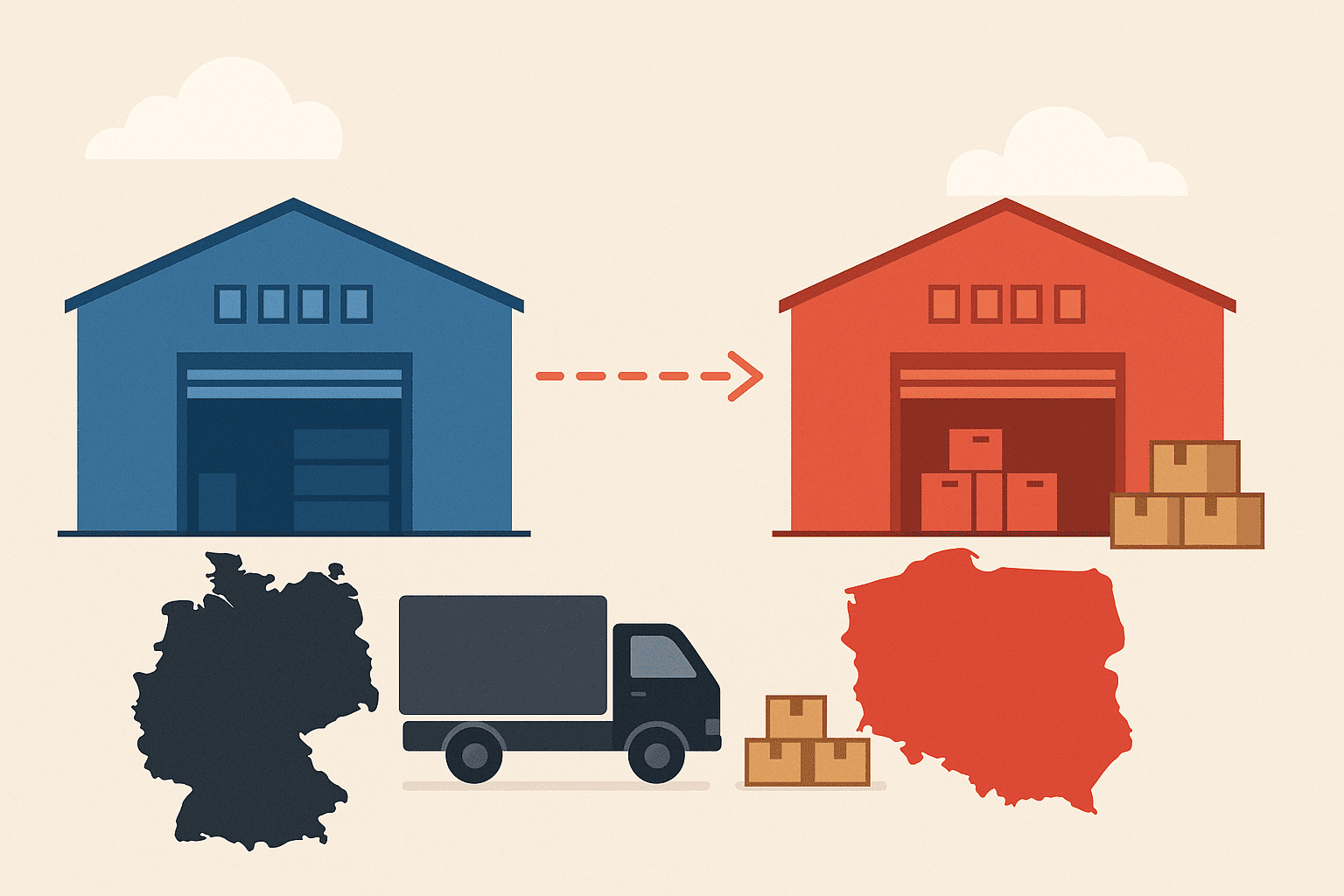
Poland has emerged as a popular logistics hub for e-commerce brands and fulfillment providers in recent years. Lower warehouse rental costs and relatively inexpensive labor rates often make it seem like the perfect place to relocate fulfillment operations. At first glance, the argument is simple: Poland is inside the European Union, close to Germany, and cheaper. But the decision becomes much more complex when you look deeper, and the hidden drawbacks can outweigh the apparent benefits.
For businesses that sell primarily to customers in Western and Central Europe, especially Germany, moving fulfillment to Poland often introduces more risks than advantages. Below, we outline the main reasons why relocating fulfillment from Germany to Poland may not be the strategic move it first appears to be.
1. Delivery Times and Customer Expectations
German e-commerce is one of the most demanding in Europe when it comes to delivery speed. Customers are accustomed to receiving orders within one or two business days. Shipping from Poland can add extra transit time compared to local fulfillment in Germany. Even with good carrier networks, cross-border shipments often introduce delays and higher risks of service disruptions.
Fast and predictable delivery is not just a “nice to have”, it is a critical competitive advantage. Many major retailers and marketplaces in Germany, such as Amazon, Zalando or OTTO, build their customer loyalty around next-day delivery. Fulfillment outside Germany makes it harder to compete at the same level.
2. Cross-Border Shipping Complexity
While Poland is part of the EU, cross-border shipments to Germany still create additional operational layers. Parcels moving from Poland to German customers must pass through international hubs, which can mean extra scanning steps, longer sorting processes, and higher chances of misrouting.
Furthermore, if you also sell to Switzerland, Norway, or the UK, the logistics get even more complicated. Polish carriers are not always as competitive for those outbound markets, while German carriers already have well-established cross-border expertise.
3. Returns Handling
E-commerce returns rates in Germany can exceed 30 percent, especially in fashion and consumer goods. Customers expect returns to be easy, fast, and free of cross-border barriers.
A return that has to travel back across the German-Polish border is slower and more expensive. Worse, it creates a negative customer experience if the refund is delayed. In competitive sectors, poor return handling can be enough to lose loyal buyers.
By keeping fulfillment inside Germany, returned parcels are processed quickly and can be restocked the same day, preserving resale value and cash flow.
4. Total Cost vs. Visible Savings
It is true that warehouse rents and wages are lower in Poland. However, total fulfillment cost is not determined by these two factors alone. Consider:
- Carrier rates: Domestic German shipping is usually cheaper and faster than cross-border shipping from Poland.
- Service levels: Hiring, training, and retaining skilled fulfillment staff is more challenging in lower-cost environments, where turnover may be higher.
- Hidden inefficiencies: Slower returns, longer shipping times, and more complex operations often erode the initial savings on rent or labor.
What looks cheaper on paper may turn out more expensive in practice once you calculate the true cost per order.
5. Marketplace and Customer Trust
Platforms like Amazon, Zalando, and OTTO value fulfillment speed, reliability, and customer satisfaction above all. Many German customers also prefer to buy from sellers who store and ship locally, it signals trust and professionalism.
Being based in Germany ensures faster Prime-eligible fulfillment for Amazon and better alignment with local marketplace standards. By contrast, a Polish warehouse can sometimes place sellers at a disadvantage in competitive ranking algorithms that reward short delivery times.
6. Strategic Positioning in Europe
Germany is not only the largest e-commerce market in Europe but also one of the most central. From a German warehouse, you can efficiently ship not just to domestic customers but also to Austria, France, the Benelux countries, Switzerland, and even Scandinavia.
Moving operations east into Poland might reduce local costs, but it also pushes you further away from the majority of high-value Western European markets. Logistics strategy should balance cost with proximity to customers, and for most sellers targeting the EU’s strongest economies, Germany remains the best hub.
7. Brand Perception
Finally, perception matters. German customers often value “Made in Germany” and “Shipped from Germany” as signals of quality and reliability. Even if your products are manufactured elsewhere, storing and shipping from Germany reinforces this image and builds trust.
On the other hand, cross-border shipping from Poland can sometimes create doubt in the customer’s mind about delivery reliability and after-sales service, even if the difference is purely psychological.
Conclusion: Stay in Germany for Long-Term Success
Relocating fulfillment to Poland may appear attractive when focusing only on rent and labor costs. But when you include shipping times, returns handling, marketplace competitiveness, customer expectations, and overall brand positioning, the equation changes.
For sellers who want to win in the German and Western European markets, operating from inside Germany ensures faster delivery, smoother returns, stronger marketplace rankings, and better customer trust.
That is why many successful brands, both global players and growing e-commerce startups, choose to keep their fulfillment in Germany. In the long run, the strategic advantages far outweigh the short-term savings of moving east.